Tuesday, January 8, 2013

BYD News


BYD gets EU license to sell electric buses

BYD Co Ltd, a Chinese maker of electric cars and batteries, said that it has received permission from theEuropean Union to sell electric buses in all of bloc's member countries, car information websiteauto.gasgoo.com reported.
The EU granted Whole Vehicle Type-Approval to BYD, which means that the Chineseautomaker is allowed to sell electric buses in all of its member countries, without the need togain individual approvals from every member country.
On Dec 11, BYD signed an agreement with Bulgaria's Bulmineral to establish an electric busjoint venture — Auto Group Motors — with each company holding a 50 percent stake in the JV.This is the first electric bus joint venture in Europe and is also the first one established by BYDin the overseas market.

BYD to supply 110MW of solar modules to South Africa

BYD Company Limited, a manufacturer of automobiles and rechargeable batteries, has announced that it will supply 110MW of solar modules-a total of around 458,000 solar modules to South Africa for the two projects.
By contributing 75MW to solar station in South Africa and also a project of BYD, BYD has supplied continually solar modules to Africa since November 2012. The total 110MW solar projects are under the South Africa's first Renewable Energy Independent Power Producer Program (REIPPP). BYD also will continue to support the project developers development South Africa phase II and phase III projects.
Tom Zhao, general manager of BYD's PV Department, stated: "South Africa is heading down the road of becoming one of the leading countries in the solar energy realm, and we're glad to have joined this journey. Our latest important project with partner is the REIPP (Renewable Energy Independent Power Producer Procurement Program) in South Africa, and that project will help satisfy the demand for energy safety there. The large-scale solar energy PV power plant is the key to achieve economies of scale and lower the costs of mass solar energy power."
According to BYD, it will further increase its efforts to open up emerging markets including Africa and get more cooperation with the project developer and the local government.

BYD Agrees to Build 500-Megawatt Solar Farm in Shaanxi Province

BYD Co. (1211), the Chinese carmaker partly owned by Warren Buffett’s Berkshire Hathaway Inc., agreed with the government of Yulin to develop a 500-megawatt solar power plant in the city in China’s northwestern province of Shaanxi.
The project will be completed in three phases, the company said today in an e-mailed statement. The first phase of 200 megawatts is expected to be commissioned by the end of 2013. The investment amount wasn’t disclosed.
The plan is the latest by the Shenzhen-based company to expand its renewable energy business. BYD said it supplied 110 megawatts of solar modules to South Africa last month.

BYD向深圳交付500台e6电动警务车

12月27日,“深圳市公安局新能源警用车辆启动仪”在市公安局大楼广场举行。凭借300台e6在深圳出租车市场2年多、累计超过3000万公里的稳定营运和安全可靠的综合表现,比亚迪成功中标深圳电动警务用车采购大单,向深圳市公安局交付500台e6纯电动警务用车。深圳市委常委、公安局局长李铭出席启动仪式,并为市交警支队交付首批e6纯电动警务用车钥匙。市公安局、发改委、财政委、采购中心、比亚迪汽车等相关单位出席,共同见证新能源汽车在深圳公务员系统率先普及。据悉,除警务用车,深圳市还计划在出租市场追加投放500台e6纯电动出租车、超过500台K9纯电动大巴,深圳已成为全球新能源车推广力度最大的城市之一。
市领导交付e6钥匙
深圳公务员带头使用比亚迪电动车
为贯彻《深圳市节能与新能源汽车示范推广实施方案》,深圳市公务员带头使用新能源汽车,为推进节约型机关建设起良好的示范作用。500辆纯电动警务用车的率先投放深圳公安系统,极大地促进了深圳新能源汽车的推广,加快深圳产业结构转型升级,是功在当代、利在千秋的惠民工程。比亚迪e6纯电动警务用车拥有零污染、零排放、低使用成本的特点,不仅仅节约能源,更可以有效减少城市二氧化碳排放和污染,改善城市环境,使深圳的空气更清新、更干净。比亚迪e6纯电动警务用车最高车速可以达到140KM/H,综合工况续航里程可以达到300公里,完全满足警务用车日常巡逻、行政执法等需求。深圳市公安局率先采用e6纯电动警务用车,是全国公安系统首次大规模普及电动警车,不仅仅在全国范围内起到利于新能源汽车推广的示范作用,更彰显了作为改革开放桥头堡和排头兵的深圳精神。
除了警务用车,深圳市在公交系统也大量引入新能源车,全力推进新能源车发展。目前深圳已有300台e6纯电动出租车投入市场,总运营里程已超过3000万公里,单车最长行驶里程超过25万公里,相当于普通私家车超过10年的行驶里程,年内还将追加投放500台。同样在深圳,200台K9纯电动大巴总运营里程超过1000万公里,并有超过500台新车将陆续投放市场。深圳在新能源车推广方面已走在全国前列,开创了公交电动化的“深圳模式”。
启动仪式现场
比亚迪新能源汽车推广取得重大进展
伴随着500辆纯电动警务用车在深圳的大规模投放,比亚迪新能源汽车在公共交通、私人用车以及公务用车市场都已推广并取得重大进展。在公共交通领域,比亚迪针对出租车及公交大巴市场推出“零元购车、零成本、零排放”解决方案,真正解决了出租车公司及公交公司一次性购买电动车的资金压力,真正实现使用者的“零风险”。在私人用车领域,比亚迪推出了e6先行者和F3DM双模电动车,率先在深圳面向个人销售,明年还将推出搭载全新DMⅡ代技术的双模电动车——秦,进一步加快私人用车市场的普及。在公务用车领域,比亚迪e6成功入选“中央国家机关新能源电动公务用车示范项目”,12辆e6先行者将服务于中央机关各部委,而本次500辆e6纯电动警务用车的投放,将具有历史性的意义,标志着比亚迪新能源汽车推广再次取得重大进展。
此外,比亚迪率先推出的“深圳模式”在多地成功复制,在西安、宝鸡、韶关、荷兰、新加坡、美国、丹麦、德国、英国伦敦等地成功实现电动车的规模化和商业化。并在天津、云南、武汉与当地企业合作,生产和推广公交电动化,加速电动车的普及。 在全球新能源汽车推广上,以比亚迪汽车为代表的中国力量正在领跑世界。

Sunday, September 16, 2012

BYD News


China, Bulgaria discuss potential use of electric vehicles in Bulgaria

Yongping Chen, the Europe Manager of the Chinese company Build Your Dreams (BYD) has visited Bulgaria on the invitation of the Electric Vehicles Industrial Cluster (IKEM) to discuss potential use of such vehicles in the country.

Chen held working meetings on the issue with members of the IKEM Managing Board, IKEM informs.

IKEM representatives and the Chinese guest have also visited the municipality of Bozhurishte near Sofia on the invitation of its Mayor, who had outlined plans for the construction of a technology park there. The Mayor also presented achievements in improving local infrastructure and declared readiness for partnership with BYD, Novinite.com reports.


BYD and Juwi-Gruppe connect 47MW PV project in Germany

  • BYD and Juwi-Gruppe have connected their 47MW PV project to the grid to begin commercial operation.
    BYD and Juwi-Gruppe have connected their 47MW PV project to the grid to begin commercial operation.
BYD and Juwi-Gruppe have announced that their 47MW solar project in Germany has officially started its commercial operation after it was successfully connected to the grid.
The project consists of 7 solar farms, the largest of which is a 24.4MW plant located in Herzogtum Lauenburg, Germany and covers an area of 168,649 square metres. The 24.2MW plant generates around 228,753,82 kWh of solar power every year. The specific locations of the other six plants have not been disclosed but they are all in Germany.
BYD supplied the PV modules for the project as mentioned by the general manager of BYD’s overseas solar sales division, Tom Zhao. “We’re very glad to have a great partnership with Juwi-Gruppe and we hope to keep expanding our cooperation. This cooperation between BYD and Juwi-Gruppe this time will take BYD’s cost effective and high efficiency solar modules to Germany to provide local residents with green and clean energy.”
BYD has focused its efforts in Germany of late. Just last week, it announced that it had connected two solar projects in the country, in cooperation with SunEnergy Europe, with a combined capacity of 6.65MW.

BYD enters Brazilian market with 21kW rooftop installation

  • BYD has completed its first rooftop PV system in Brazil.
    BYD has completed its first rooftop PV system in Brazil.
China-based BYD has connected its first rooftop solar project in Brazil. The PV system has been installed on the rooftop of the Brazilian Concessionária Ecorodovias highway toll station and has a capacity of 21kW. The installation was carried out by the EPC contractor Blue Sol Solar Energy, a Brazlian distributor of BYD products. 
Following the success of this project, BYD are keen to expand its solar business in the country. The general manager of BYD PV, Tom Zhao, said, “Though the project is not big enough, it’s BYD’s first rooftop project in the region. Based on the project, we are going to develop more business here. In solar industry, BYD has its unique core competence, we believe it is a good start.”
Earlier this week, BYD announced that it had connected a 47MW PV project in Germany — a project developed in collaboration with Juwi Gruppe.

Electric bus fleet heads to Tel Aviv
A BYD electric bus (Photo credit: Courtesy)
Electric-powered buses will soon be plying the streets of Tel Aviv.
The Dan Bus Company, which serves Tel Aviv and its suburbs, has signed a deal with Chinese company BYD to purchase up to 700 full-size electric buses. The first buses will be deployed in the coming months, with more buses gradually joining Dan’s fleet over the next several years. Eventually, Dan hope to replace about half of its current fleet of about 1,300 buses with the new electric models.
The BYD buses are pure electric — without a standard internal combustion engine for backup, as in hybrids – and some of the models also sport a photovoltaic system on the roof to generate electricity, which is fed into the battery. The battery itself was developed by BYD, and the company claims that it is good for 6,000 recharges.
Recharging is done by simply plugging the battery into a special charger supplied by BYD, and 100 kilowatts of power is enough to supply the bus with enough power to run for 100 kilometers. The full recharging cycle is completed in 3-6 hours. Recharging will be done at Dan garages, not at Better Place recharging stations, which are being deployed around Israel for use by passenger vehicles.
Each bus is 12 meters long, and can run up to about 250 kilometers (155 miles) on a single charge, more than enough for a daily run on most routes. That assumes normal road conditions — hardly the case in traffic-choked Tel Aviv, where the distance per charge is likely to be somewhat smaller, Dan officials said.
BYD (an acronym for “Build Your Dreams”) is a major player in the electric bus market. Its buses are deployed in a number of cities in China, Europe, and North and South America, and US investor Warren Buffet owns 10 percent of the company. According to the BYD, the accumulated mileage achieved for its electric buses by the end of July 2012 reached over 8.23 million kilometers (5.1 million miles).
The buses are being brought to Israel by BYD’s importer, Clal Motors. In a statement, Doron Vadai, the CEO of Clal Motors, said, “BYD’s electric bus is the perfect solution for the city of Tel Aviv, reducing both emissions and noise for the benefit of the citizens of Tel Aviv. This pilot will make Dan one of the pioneers in the zero emission public transportation era in the world.”
China's Guangdong Nuclear Power Secures Orders for BYD Battery Back-up for Nuclear Plants
China's Guangdong Nuclear Power Corp (CGNPC) announced the results of the bidding for their largest high-power, high-capacity battery back-up stations to date, with BYD of Shenzhen winning the bid.
A "National Energy Application Technology Research and Engineering demonstration project", CGNPC plans to couple these 3.5 Mega-Watt-hour back-up batteries with their nuclear power stations to deliver power up to 2.5MW levels. The energy storage station will serve as an emergency power source to safeguard workers and protect station equipment from being damaged in extreme conditions where the nuclear plants may lose their electrical supply.
Nuclear safety has become tantamount for the nuclear power industry due to recent events with increasingly stricter standards for product reliability. With failure potentially having life-or-death consequences, every single component, from reactor to screw, is held to a higher commercial standard. The battery backup system is designed to avert a disaster like Japan's Fukushima Power Plant 311 experienced because of a power failure. Technologies that qualified for this bid were all reviewed for their maturity, commercial stability and absolute safety and reliability even in the harshest conditions, such as earthquake, tsunami, fire, and radioactive exposure. BYD has gained industry-wide recognition as the safest, most environmentally-friendly and most mature battery energy storage solution available. BYD's second generation energy storage station can provide "passive" emergency power for Nuclear power plants.
In 2010, BYD launched the world's first MWh-level Iron-Phosphate (or "Fe") energy storage station attached to China's Southern Power Grid. In 2011, this plant was dwarfed by an even larger 36 MWh storage station at China's State Grid's "National Sun" project - a renewable, base-load power generation plant. BYD has also provided energy storage station solutions to global companies such as the EPRI, Chevron, Duke Energy, and the Power Science Institute. He Long Vice President of BYD said, "BYD is honored to cooperate with China's Guangdong Nuclear Power Corp to improve the reliability of our world's nuclear assets." Currently, there are more than 400 second generation nuclear power units worldwide, affording the opportunity for significant growth in the battery back-up industry.
BYD is a manufacturer of environmentally-friendly battery technologies like the BYD's Iron Phosphate battery used in BYD electric vehicles and electric buses.
BYD Sells First Electric Cars to Thailand
BYD e6 electric crossover.
BYD e6 electric crossover

SHENZHEN CHINA - Recently, MEA, the Thailand power company, has placed an order for 3 pure electric vehicles from BYD. This is BYD's first new energy vehicle business order in Thailand, adding a new domain for its global business area.
MEA is one of the three largest power companies in Thailand, mainly provide power supply for the capital Bangkok and two other nearby provinces. BYD will supply 3 pure electric vehicles and ancillary charging devices to MEA, to promote the development of electric vehicle industry in Thailand, also introduce BYD's Green City Solution and laid a strong foundation for Thai intelligent cities building.
At present, electric vehicles are generally not mass launched in Thailand. After recognizing that BYD's pure electric taxis have been successfully operating in Shenzhen for more than 2 years, MEA, who realizing the development trend of pure electric vehicle, rapidly showed great interests. The 3 purchasing electric vehicles are maybe used for the executive business cars for MEA senior leadership, to enhance its public image for green and environment protection.
MEA executive said, BYD is a pragmatic company, with the benefiting humankinds green career who focusing on electric vehicle industry.BYD has the world leading research, development and manufacturing strength on pure electric vehicle. Cooperation with the BYD reflects our common green ideas. We will keep the close relationship with BYD, to promote the development of electric vehicle, energy storage, and solar power industry in Thailand.
BYD e6 electric taxi, as the world's largest pure electric taxi team with launching up to 300, has been successfully operating in Shenzhen for over 2 years, which driving range achieve 24,380,000 kilometer. Electric buses also have launched more than 200, successfully running in Shenzhen, Changsha, Xi' AN, Shaoguan and other cities, which fleet footprints overseas present in many cities and regions.
The e6 order this time is BYD's huge breakthrough in Thailand, which opening up a whole new market for new energy products. Mr. Liu, the director of BYD Asia - Pacific Auto Sales, said, BYD is a company focusing on new energy industry. Our products have not only pure electric cars, electric buses, but also solar products and energy storage station. Our storage products based on the world's leading Fe battery technology, which have been successfully applied in the projects of Nation Grid and China Southern Power Grid. The cooperation with MEA this time is quite smoothly. We look forward for more multi-faceted cooperations with MEA in energy storage, solar power and other fields for Thailand's intelligent city and green future.
Yunnan Investment, BYD to open energy vehicle manufacturing plants in China
Yunnan Investment Holdings and BYD are planning to open new energy vehicle manufacturing plants in Yunnan Province, southwest China.
Both the companies will cooperate in three stages over the coming year.
Under the first stage, the market will be developed with BYD supplying Yunnan Investment Holdings BYD e6 electric taxis to be dispatched in the main cities of Yunnan including Kunming, Qujin, Zhaotong, Honghe, Dali and Wenshen.
Second stage will see both the companies expand the business to electrify urban public transportation with BYD's GreenCity Electric buses.
In the third stage, BYD will work with Yunnan Investment to open a new-energy vehicle manufacturing base to serve all of southwest China and neighboring countries.
BYD chairman Chuanfu Wang said, "BYD is the only enterprise who has pure electric buses, pure electric and environmentally-friendly Iron Phosphate (Fe) battery technology in China."


Sunday, March 11, 2012

Man and machine

“THE most beautiful deleveraging yet seen” is how Ray Dalio describes what is now going on in America’s economy. As America has gone through the necessary process of reducing its debt-to-income ratio since the financial crash of 2008, he reckons its policymakers have done well in mixing painful stuff like debt restructuring with injections of cash to keep demand growing. Europe’s deleveraging, by contrast, is “ugly”.
Mr Dalio’s views are taken seriously. He made a fortune betting before the crash that the world had taken on too much debt and would need to slash it. Last year alone, his Bridgewater Pure Alpha fund earned its investors $13.8 billion, taking its total gains since it opened in 1975 to $35.8 billion, more than any other hedge fund ever, including the previous record-holder, George Soros’s Quantum Endowment Fund.
Mr Dalio, an intense 62-year-old, is following in the footsteps of Mr Soros in other ways, too. Mr Soros has published several books on his theories, and is funding an institute to get mainstream economists to take alternative ideas seriously. Mr Dalio, too, is now trying to improve the public understanding of how the economy works. His economic model “is not very orthodox but gives him a pretty good sense of where the economy is,” says Paul Volcker, a former chairman of America’s Federal Reserve and one of Mr Dalio’s growing number of influential fans.
Whereas Mr Soros credits the influence of Karl Popper, a philosopher who taught him as a student, Mr Dalio says his ideas are entirely the product of his own reflections on his life as a trader and his study of economic history. He has read little academic economics (though his work has echoes of Hyman Minsky, an American economist, and of best-selling recent work on downturns by Carmen Reinhart and Kenneth Rogoff) but has conducted in-depth analysis of past periods of economic upheaval, such as the Depression in America, post-war Britain and the hyperinflation of the Weimar Republic. He has even simulated being an investor in markets in those periods by reading daily papers from these eras, receiving data and “trading” as if in real time.
In the early 1980s Mr Dalio started writing down rules that would guide his investing. He would later amend these rules depending on how well they predicted what actually happened. The process is now computerised, so that combinations of scores of decision-rules are applied to the 100 or so liquid-asset classes in which Bridgewater invests. These rules led him to hold both government bonds and gold last year, for example, because the deleveraging process was at a point where, unusually, those two assets would rise at the same time. He was right.
What Mr Dalio calls the “timeless and universal” core of his economic ideas is set out in a 20-page “Template for Understanding” that he wrote shortly after the collapse of Lehman Brothers in 2008 and recently updated. The document begins: “The economy is like a machine.” This machine may look complex but is, he insists, relatively simple even if it is “not well understood”. Mr Dalio models the macroeconomy from the bottom up, by focusing on the individual transactions that are the machine’s moving parts. Conventional economics does not pay enough attention to the individual components of supply and, above all, demand, he says. To understand demand properly, you must know whether it is funded by the buyers’ own money or by credit from others.
A huge amount of Bridgewater’s efforts goes into gathering data on credit and equity, and understanding how that affects demand from individual market participants, such as a bank, or from a group of participants (such as subprime-mortgage borrowers). Bridgewater predicted the euro-zone debt crisis by totting up how much debt would need to be refinanced and when; and by examining all the potential buyers of that debt and their ability to buy it. Mr Volcker describes the degree of detail in Mr Dalio’s work as “mind-blowing” and admits to feeling sometimes that “he has a bigger staff, and produces more relevant statistics and analyses, than the Federal Reserve.”
Two sorts of credit cycle are at the heart of Mr Dalio’s economic model: the business cycle, which typically lasts five to eight years, and a long-term (“long wave”) debt cycle, which can last 50-70 years. A business cycle usually ends in a recession, because the central bank raises the interest rate, reducing borrowing and demand. The debt cycle ends in deleveraging because there is a “shortage of capable providers of capital and/or a shortage of capable recipients of capital (borrowers and sellers of equity) that cannot be rectified by the central bank changing the cost of money.” Business cycles happen often, they are well understood and policymakers are fairly adept at managing them. A debt cycle tends to come along in a country once in a lifetime, tends to be poorly understood and is often mishandled by policymakers.
An ordinary recession can be ended by the central bank lowering the interest rate again. A deleveraging is much harder to end. According to Mr Dalio, it usually requires some combination of debt restructurings and write-offs, austerity, wealth transfers from rich to poor and money-printing. A “beautiful deleveraging” is one in which all these elements combine to keep the economy growing at a nominal rate that is higher than the nominal interest rate. (Beauty is in the eye of the beholder: Mr Dalio expects America’s GDP growth to average only 2% over a 15-year period.)
Print too little money and the result is an ugly, deflationary deleveraging (see Greece); print too much and the deleveraging may become inflationary, as in Weimar Germany. Although Mr Dalio says he fears being misunderstood as saying “print a lot of money and everything will be OK, which I don’t believe, all deleveragings have ended with the printing of significant amounts of money. But it has to be in balance with other policies.”
Mr Dalio admits to being wrong roughly a third of the time; indeed, he attributes a big part of his success to managing the risk of bad calls. And the years ahead are likely to provide a serious test of whether the economic machine is as simple as he says. For now, he is in a more optimistic mood thanks to the European Central Bank’s recent moves, in effect, to print money. Although he still expects debt restructuring in Spain, Portugal, Italy and Ireland, on top of that in Greece, he says that the “risk of chaos has been reduced and we are now calming ourselves down.” Here’s hoping he is right again.

Related Documents

Saturday, February 25, 2012

A Billionaire's Take on the China Theme

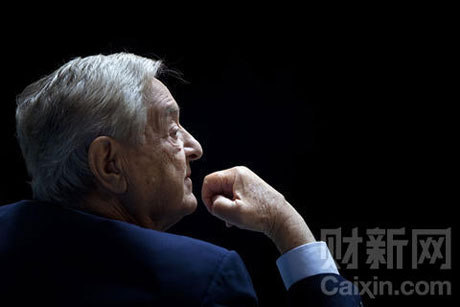
George Soros and other influential voices at the 2012 World Economic Forum found China at the center of financial discourse
 
a
Caixin: You experienced the Asia financial crisis and now we are in the middle of the euro debt crisis. What are the differences?
George Soros: Actually, there is a remarkable similarity – a weakness in the structure of the world. The countries that became heavily indebted in euros turned out to be in a similar position to the Asian countries that became heavily indebted in U.S. dollars.
Both are borrowing in a foreign currency. You see, this is something that I didn't realize until recently: The euro is not controlled by individual countries. They have no control over issuing the currency. They are in the same position as a third-world country borrowing in a foreign currency.
And in the case of Asian countries, it was the IMF that imposed strict fiscal discipline. In the case of European countries, it was Germany that was fulfilling the same function. And that policy of strict fiscal discipline is counterproductive because it pushes the country that is heavily in debt into a recession, while the debt burden actually increases. And that is what's happening in Europe.
Caixin: When a financial crisis arrives, people claim there are two forces at play: One is from rational market investors, the other is from speculators. In terms of the euro crisis, which is the dominant force?
Soros: I believe that it was mainly caused by a lack of understanding about how financial markets really operate. European authorities have had very little interaction with the market, little experience. So financial authorities in the Anglo-Saxon world understand markets better than continental Europeans.
I gave a long list of mistakes made by European authorities in dealing with the Greek crisis, always doing too little too late. That's what aggravated the crisis. To me, it's very convincing.
Caixin: You said previously there should first be fiscal consolidation in the wake of the euro crisis, then restructuring. What else is needed?
Soros: Fiscal discipline at a time of economic decline creates this deflationary spiral. But given the fact that Germany does not want to be the deep pocket, financing other countries, you can't avoid first imposing fiscal discipline. Then, you must find a way to exit this vicious circle. And this cannot be done by the individual countries.
Keynes would have argued that creditor countries should stimulate their economies to offset recession in debtor countries. Now, the biggest creditor country, Germany, is obliged by its constitution to balance the budget. Therefore, it cannot stimulate.
The only possibility for stimulation has to come from the European Union. It has to be underwritten, supported or guaranteed by all member countries acting jointly and that means some kind of euro bond. Which is of course something that (German Chancellor) Angela Merkel is opposed to.
Caixin: How big is the likelihood of the euro falling apart?
Soros: The euro cannot fall apart because, if it did, the consequences would be catastrophic, because financial assets are intermingled based on a common currency. And if they became separated and had different values, you wouldn't know whether your counterparty was bankrupt or not. So it would be a dislocation that would be out of control.
What is happening now is that, increasingly, the financial system within the euro zone is being re-nationalized, so that most of Italian bonds are being held by Italian banks, Spanish bonds by Spanish banks, and so on. If that goes on for an extended period, it becomes possible for the euro to fall apart.
Caixin: What will we do if the worst-case scenario happens?
Soros: Well, we are moving in that direction. And of course there have been currency unions in the past that fell apart. For instance after the First World War in the Austro-Hungarian Empire, Czechoslovakia, Hungary and Austria each had a separate currency.
But in the present phase, where German banks and French banks have a lot of Italian and Spanish bonds, and German banks have claims against Spanish companies and so on, to break up this union now would be catastrophic. You can't unscramble an omelet. Once you have mixed the eggs together, you can't separate them again. This is actually in a very gradual way happening, slowly.
For an Italian bank to borrow from the central bank at 1 percent, and buy Italian bonds at 6 percent is very good arbitrage, and without risk. Because if Italy fails, then Italian banks would fail also, whether they have the bonds or not. So for them, it's riskless. For a German bank, it would be very risky. So right now, the financial system of the euro zone is being unscrambled.
Caixin: It seems you are very concerned about the role of international financial institutions such as the IMF. What kind of role can it play, and what kinds of reforms should IMF undergo?
Soros: Actually, the IMF right now is playing a very good role. First of all, it has substantial financial resources because as a result of the London G20 meeting in 2009, there was a US$ 1 trillion recapitalization.
The economists at IMF understand that the policy advocated by Germany is counterproductive. So they keep warning Europe against the policy that Germany is advocating. And I think that's very healthy, very positive.
Caixin: What role do you think China should play on the international financial stage in, for example, the euro crisis or an even greater crisis?
Soros: China has become one of the few positive forces in the global economy, a motor moving the economy forward. Not a strong motor, because it's much smaller than the United States. But it's wanted because of its (foreign currency) reserves and ability to stimulate the economy.
China can move the economy, the global economy, forward. But the (Chinese) leadership does not want to take responsibility for the global system. They say that China is a developing country, has got many problems on its own, and cannot take on an addition of the global system. (This is) very similar to the position that Germany is taking, not wanting to accept responsibility for the rest of the euro zone.
So within the small euro system, Germany is the main creditor. In the global system, China is the main creditor. And the creditors don't want to take responsibility for preserving the system.
That is the point that Keynes made many years ago: That creditors are equally responsible if there's an imbalance, not only debtors. If you only punish the debtors and don't stimulate the creditors, then the world goes into deflation. So in different contexts, we are replaying the problems of the Great Depression. We haven't learned the lessons that John Maynard Keynes taught us about deflation.
Caixin: What do you think about the yuan's internationalization progress?
Soros: That is moving forward very rapidly because European banks had been the main suppliers of credit to the world.
In the first quarter 2011, European banks had lent the developing world US$ 3.7 trillion. American banks lent US$ 1.5 trillion and Japanese banks lent something like US$ 700 billion.
So out of over US$ 5 billion in lending to the developing world, more than two-thirds came from European banks. That, of course, included banks based in London. The French banks, for instance, were very big in financing international trade. And because of the euro crisis, the banks were short of capital and had to shrink their balance sheets. That created a lack of financing for international trade.
So a lot of trade started shifting from dollars to being financed by offshore yuan based in Hong Kong. Actually, the Hong Kong market was rising, and was growing very rapidly. There has been a considerable slowdown in the last few months, and I don't know whether this is due to developments in the Chinese economy, or the fact that European banks now have access to credit from the European central bank. But the credit crunch for the European banking system has now eased.
Caixin: But the yuan is not fully convertible yet. How would that impact its path to internationalization? 
Soros: It's very indirect because the mainland yuan is separated from the offshore yuan. But there are interconnections. There was a Korean market, and there has been some more or less black market capital moving into China, which then because of the credit crunch in Europe left China, and it may or may not have coincided with the collapse of the Chinese real estate bubble. Whether there is a causal relationship as well is something that needs a lot of research. But I suspect there is a connection.
Caixin: Emerging markets weathered the storm relatively well. What kinds of risks do you think are ahead for emerging markets, perhaps from a so-called global imbalance?
Soros: Well, the developing world has done much better, mainly because of stimulation from China. Brazil could sell its food to China and could borrow a lot of money very cheaply to develop oil reserves in remote areas. It's very expensive. Brazil's economic growth is fueled by trade and investment with China.
The same is true in Africa. A lot of capital has gone into Africa, and if China now becomes more cautious because of the decline in exports, decline in its export surplus, that could have negative effects on Africa and Latin America.
Caixin: "State capitalism" was a buzz word at Davos this year. Some think China's economic achievements prove the success of state capitalism. How would you compare state capitalism to liberal capitalism?
Soros: First of all, as an individual, I'd hate to be subjected to the bar of the state, that my existence should be determined by the state. And if it were subject to that power from another state, like China, I don't think I would like that.
I don't think state capitalism is a very attractive form of capitalism. It has been very successful in China, but I very much hope that China will continue to develop and pass that phase as it develops, and begin to respect the freedom of individuals more. And I think the Chinese people feel the same way.
Google